Whitening toothpaste is often sold as a fast way to get a brighter smile. Many brands claim it can remove stains and whiten teeth simply by brushing every day. If you have ever looked at these products in a store, you may have wondered if they really work. Some people also compare them with professional whitening done by a dentist in Grande Prairie. Knowing what whitening toothpaste can and cannot do helps you pick the right option for your smile.
How Whitening Toothpaste Works
Most whitening toothpastes work in a few simple ways.
- They may contain mild scrubbing agents. These are tiny particles that gently polish the surface of your teeth. As you brush, they help remove stains on the outer layer of the enamel.
- Some toothpastes also contain chemical ingredients such as hydrogen peroxide or carbamide peroxide. These ingredients help break down stain particles and slightly lighten the surface colour.
- Other common ingredients include silica and calcium carbonate. These help clean and polish teeth without being too harsh. Some formulas even include enzymes that help reduce buildup from food and drinks.
Regular toothpaste focuses on cleaning. Whitening toothpaste goes a step further by trying to reduce visible stains while you brush. You still brush for about two minutes, but the added ingredients slowly work on stains each day.
What Whitening Toothpaste Can Remove
Whitening toothpaste works best on surface stains on your teeth. These are called external stains.
Common causes include:
- Coffee
- Tea
- Red wine
- Smoking or tobacco use
- Dark-colored foods and drinks
These stains build up slowly on the outer layer of teeth. A teeth stain removal toothpaste can help reduce or lighten them over time.
You may also notice improvement in:
- Mild yellowing from food and drinks
- Light dullness caused by plaque buildup
- Slight surface discoloration from everyday habits
Results do not show right away. Most people notice small changes after 2 to 4 weeks of regular use. The improvement happens slowly, not suddenly or in a big way. Brushing every day is important if you want to see visible results.
What Whitening Toothpaste Cannot Remove
Not all stains are on the surface. Some stains form inside the tooth. These are called intrinsic stains, and whitening toothpaste cannot remove them.
Intrinsic stains may happen due to:
- Natural aging of teeth
- Certain medicines taken during childhood
- Too much fluoride during early tooth development
- Internal changes in the tooth structure
These stains are deeper and cannot be reached by brushing alone. In such cases, professional teeth whitening near you is often needed because it works below the tooth’s surface.
There are also some types of discoloration that whitening toothpaste will not change at all:
- Gray or dark tones from deep tooth changes
- Teeth that have had root canal treatment
- Fillings, crowns, or bonding materials
These restorations do not respond to whitening because they are not natural tooth enamel. If colour improvement is needed, a dentist may recommend other cosmetic dental treatments.
How Effective Whitening Toothpaste Really Is
Whitening toothpaste can help, but its results are limited. It is best for people with mild staining or dull-looking teeth.
In most cases, you may see teeth become slightly lighter, usually by one or two shades. The change happens slowly over several weeks. It is not a quick fix.
How well it works depends on a few things:
- The type of stain on your teeth
- How dark or light your teeth are to begin with
- How regularly you brush
Someone with light surface stains may notice better results compared to someone with deep discoloration.
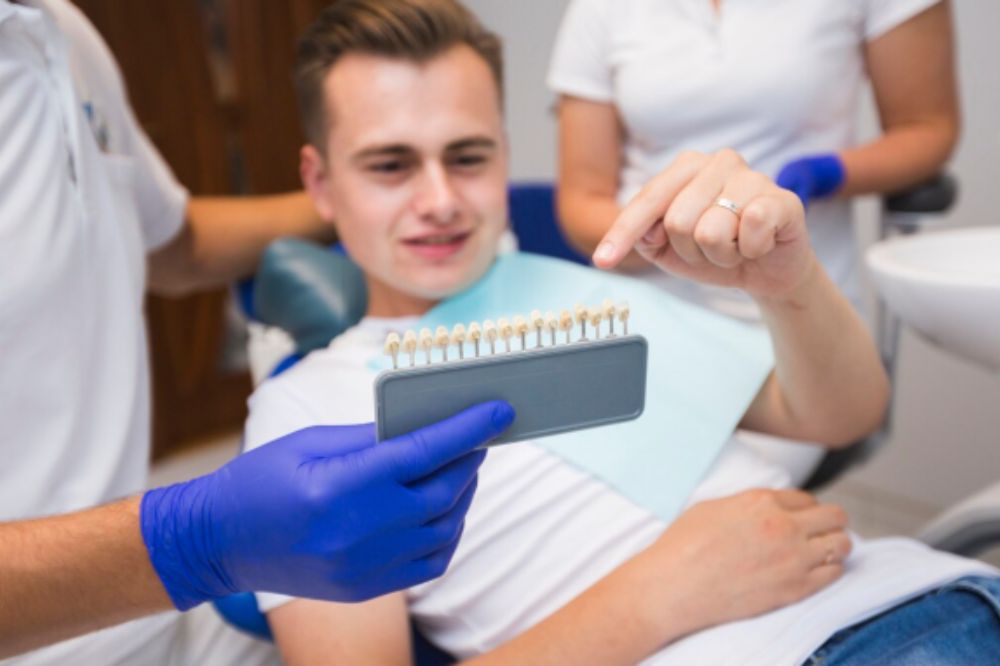
If you want faster, more visible results, professional whitening at a dental clinic near you is a better option. Dentists use stronger whitening products that can make teeth brighter in less time. These treatments go deeper into the tooth and give clearer results in just one or two visits.
Is Whitening Toothpaste Safe?
Most whitening toothpastes are safe when used correctly. They are made for daily use and are widely available. However, using them too often or brushing too hard can cause problems.
Possible issues include:
- Tooth sensitivity
- Mild enamel wear over time
- Gum irritation in some cases
People with sensitive teeth should be careful when choosing whitening products. Some formulas are stronger than others and may not suit everyone.
To use whitening toothpaste safely, keep these simple habits in mind:
- Follow the directions on the product label
- Use a soft toothbrush
- Brush gently instead of pressing hard
- Do not use it more than two times a day
- Stop using it if your teeth start feeling sensitive or uncomfortable
- Talk to your dentist before using it for a long time
If your teeth are already sensitive or worn, it is better to get dental advice before using whitening products regularly.
When Professional Whitening Is a Better Choice
Whitening toothpaste can help a little with light stains, but it has its limits. If you want quicker and more visible results, professional whitening is a better option.
A dentist can:
- Use stronger whitening gels in a safe way
- Protect your gums and tooth enamel during treatment
- Treat deeper stains that whitening toothpaste cannot reach
Even though it may cost more, the results last longer. In many cases, the brightness can persist for several months or even a year, depending on habits like coffee or smoking.
Is Whitening Toothpaste Right for You?
Whitening toothpaste is an easy and low-cost way to improve the look of your teeth. It works best for surface stains and light discoloration. If your teeth are only a little stained, it can help your smile look cleaner and brighter over time.
However, it is not a strong whitening option. It cannot remove deep stains, stains inside the tooth, or change dental restorations. In many cases, professional dental treatment gives faster and more noticeable results. Understanding this difference helps you set realistic expectations and choose what is right for your smile.
Visit Swanavon Dental Clinic and let the dental team help you choose the right whitening option for your teeth.
Frequently Asked Questions
How long does whitening toothpaste take to show results?
Most people see small changes after 2 to 4 weeks of regular use.
Is it safe to use whitening toothpaste daily?
Yes, it is safe when used correctly. But brushing too often or too hard can harm your teeth.
Will whitening toothpaste affect crowns or fillings?
Whitening toothpaste only works on natural teeth. It does not change the colour of crowns, fillings, or any other dental work.
What makes professional whitening treatments more effective than toothpaste?
Professional whitening treatments work better because they reach deeper layers of the teeth. This helps the teeth become whiter faster and gives more noticeable results.